Incheon National University Launches Full-Scale Demonstration of Biogas Conversion of Biodegradable Plastics on Campus
- 글번호
- 423203
- 작성일
- 2026-04-22
- 수정일
- 2026-04-22
- 작성자
- 홍보과 (032-835-9490)
- 조회수
- 448
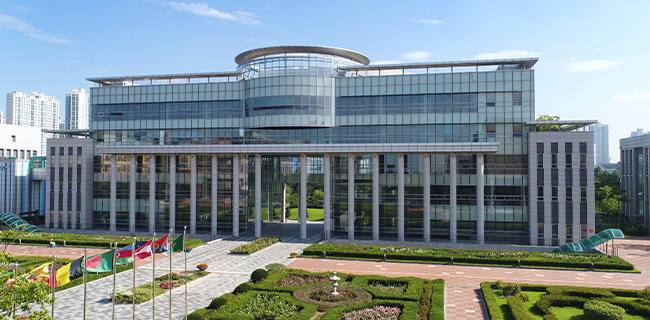
Incheon National University Campus
- Collaboration among RISE Project Group, University Consumer Cooperative, and CJ CheilJedang to replace single-use items with biodegradable alternatives and establish a recovery system
- Expected to verify the safety and recovery system of integrated biogasification with food waste and secure a technological base targeting the biodegradable plastics market projected to reach KRW 150 trillion by 2032
Incheon National University (President: In-jae Lee) announced on the 8th that its RISE Project Group will launch a full-scale demonstration project for a circular economy based on eco-friendly bio-materials, in response to prolonged geopolitical risks in the Middle East that are destabilizing the supply of petroleum energy and petrochemical feedstocks such as naphtha.
Amid growing uncertainty in global energy markets and increasing pressure to reduce dependence on fossil fuels, securing eco-friendly alternative materials has become a critical task across the petrochemical industry. In particular, demand for biodegradable plastics and bio-based materials is rapidly rising in line with strengthened global regulations for carbon neutrality.
In response to these policy and industrial shifts, the RISE Project Group will implement the “Biogas Conversion Demonstration Project for Biodegradable Plastics,” selected under the Ministry of Environment’s Circular Economy Regulatory Sandbox, within the university campus.
This project includes activities to improve campus facilities and daily-use items.
In the first phase, single-use items used in campus coffee shops will be replaced with alternative materials.
A partner organization will provide related products, including straws.
The core process focuses on establishing an integrated “use–collection–resource conversion” circular system. Biodegradable plastic waste generated on campus will be collected through a standardized dedicated system and transported to an on-campus pilot integrated biogasification facility. There, it will be co-processed with food waste to quantitatively evaluate decomposition efficiency and energy conversion rates.
Through this process, the RISE Project Group aims to verify the safety of biogas generated from the integrated decomposition of biodegradable plastics and food waste, and to institutionalize optimized recovery and treatment systems. The project will also focus on establishing practical processing standards and empirical data for biodegradable plastics, which have been difficult to recycle under existing waste management systems.
Gyu-won Kim, Director of the RISE Project Group, stated, “This demonstration project goes beyond a simple eco-friendly campaign. It represents a significant case of transforming the university campus into a core testbed for carbon-neutral technologies through a consortium involving industry, academia, research institutes, and government, including leading companies such as CJ CheilJedang.” He added, “We aim to develop a sustainable circular economy model that can be immediately applied across local communities and industries.”
Dong-gu Kang, Head of the Industry–Academic Cooperation Foundation (Deputy Director of the RISE Project Group), emphasized that “data generated from this large-scale campus testbed will directly contribute to improving legal and institutional frameworks related to biodegradable plastic processing and to establishing commercialization models.”
Meanwhile, this regulatory sandbox-linked demonstration is evaluated as a case that complements the limitations of existing waste management regulations while proving innovative energy conversion technologies for biodegradable plastics. According to market research firm DataM Intelligence, the global biodegradable plastics market is expected to grow from approximately KRW 113 trillion (USD 24.82 billion) in 2024 to KRW 150 trillion (USD 100.56 billion) by 2032.
- 첨부파일