Postdoctoral Researcher Sang-eun Nam of the Yellow Sea Research Institute at Incheon National University Proposes an Aquatic Ecosystem Impact Assessment Model through the First Application of Genome-Based Multi-Omics to Two Native Aquatic Species in Korea
- 글번호
- 423197
- 작성일
- 2026-04-22
- 수정일
- 2026-04-22
- 작성자
- 홍보과 (032-835-9490)
- 조회수
- 420
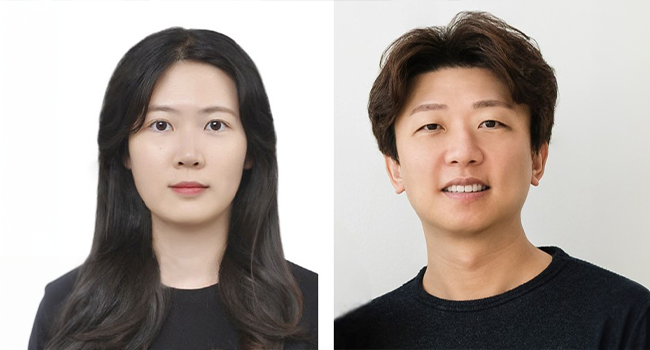
From left: Sang-eun Nam, Postdoctoral Researcher at the Yellow Sea Research Institute, Incheon National University, and Professor Jae-sung Lee of the Department of Marine Science
Incheon National University (President In-jae Lee) announced that a study led by Sang-eun Nam, a postdoctoral researcher at the Yellow Sea Research Institute (Director: Professor Jae-sung Lee of the Department of Marine Science), has been published in top-tier international journals in the field of environmental science. The study is the first to apply a genome-wide, multi-dimensional omics approach to two aquatic species native to Korea, elucidating the impact of triclosan on aquatic ecosystems.
In this research, two representative species widely inhabiting Korean freshwater systems were analyzed: the freshwater shrimp, an invertebrate, and the minnow, a vertebrate (source: Korea Eco-Network Co., Ltd.). The study examined the effects of triclosan exposure at both molecular and physiological levels. Results revealed that triclosan induces severe disruptions in energy metabolism at the molecular biochemical level in both species.
Sang-eun Nam stated, “Although triclosan—an antimicrobial agent—has been banned in personal hygiene products since 2016 due to adverse effects such as endocrine disruption, it is still being detected in aquatic environments and has recently been found in some toothpaste products.” He added, “This suggests continuous exposure of domestic aquatic organisms and raises concerns about potential accumulation in species consumed as food.”
He further explained, “Due to the lack of genomic information for many native aquatic species, precise molecular-level impact assessments have been limited. In this study, we conducted complete genome sequencing of key species and applied a multi-omics approach to comprehensively identify intracellular molecular responses across transcriptional, translational, and metabolic levels.”
This research is significant in that it establishes genomic data for representative freshwater species in Korea and demonstrates the potential to improve the precision and modeling of aquatic ecosystem impact assessments through integrated multi-omics analysis.
Additionally, by providing scientific evidence on the toxicity and mechanisms of triclosan in fish and crustaceans, the findings are expected to contribute to future management strategies and regulatory policy development for hazardous substances.
The study was published in the top 5% JCR-ranked environmental journal Journal of Hazardous Materials (IF: 11.9) and the top 5% journal in aquatic biology, Aquatic Toxicology (IF: 4.3).
This research was supported by the “Technology Development Program for Securing Aquatic Ecosystem Health,” led by the Ministry of Climate, Energy and Environment and implemented by the Korea Environmental Industry & Technology Institute.
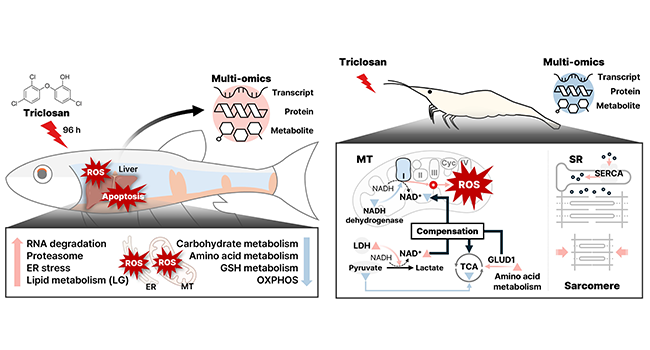
(Left) Toxic effects in the liver of minnows and (right) toxic effects in shrimp muscle following triclosan exposure